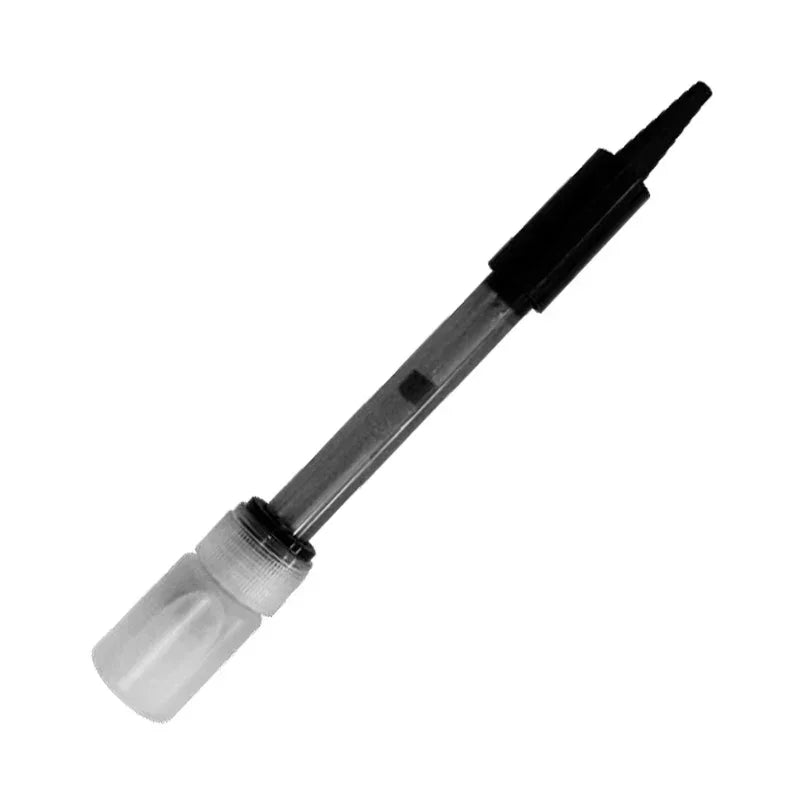
In short: the Moov JustSalt is a salt chlorinator available in three sizes: MC50JUST, MC85JUST, and MC130JUST. The choice depends solely on the pool's water volume. All three share the same enclosure, the same self-cleaning polarity-reversing cell, the hybrid normal salt or low salt mode, the Boost mode, and Bluetooth control via the ePool app. Moov offers a 3-year warranty on the cell and the enclosure.
Which model for which pool
That is the only decision to make. Moov publishes two recommended volumes per model: NS for normal salt mode and LS for low salt mode. If you plan to use low salt mode, refer to the LS column; otherwise, the cell will run at maximum capacity all the time and wear out faster.
| Model |
Recommended volume NS (normal salt) |
Recommended volume LS (low salt) |
Warranty |
| MC50JUST |
50,000 L / 15,000 gal |
40,000 L / 10,000 gal |
3 years |
| MC85JUST |
85,000 L / 25,000 gal |
65,000 L / 17,000 gal |
3 years |
| MC130JUST |
140,000 L / 40,000 gal |
93,000 L / 25,000 gal |
3 years |
Useful clarification: at Moov, the column in liters and the column in gallons are not exact conversions of each other. They are two sets of rounded values published as is by the manufacturer. We reproduce them without recalculating them, because doing the conversion yourself results in incorrect figures that are seen circulating everywhere.
The problem it solves
A traditional chlorine pool requires manual intervention almost every day in the middle of the season: dose, measure, correct, and repeat after every storm or every big weekend of swimming. Between two doses, the chlorine level gets too high and then drops too low, and it is in these dips that the water turns.
The cause is simple: chlorine added by hand arrives in bursts, while the demand for disinfectant is continuous and varies with the temperature, the sun, and the number of swimmers.
The chlorinator reverses the logic. Salt dissolved in the water stays in the pool, the cell converts it into active chlorine continuously while the pump is running, and the chlorine becomes salt again after doing its job. The level remains stable, there are no more peaks or dips, and there are no more chlorine jugs to handle or store.
Hybrid mode: normal salt or low salt
This is the particularity of the JustSalt range. The enclosure is set to two reference salinities.
Normal salt (NS): approximately 3000 ppm stated in the brochure, with an internal enclosure setting of 3200 ppm. This is the mode that provides full production capacity, therefore the largest treatable volume.
Low salt (LS): 1500 ppm. The water is significantly less salty to the taste and touch, which is gentler on the skin, the eyes, and the pool coping. In return, the cell produces less, hence the lower recommended volumes in the LS column.
The setting is done in the Electrolysis menu, Salinity section. Nothing forces you to choose once and for all: the same device does both.
Self-cleaning polarity-reversing cell
The titanium plates get scaled with the water's calcium. On a chlorinator without self-cleaning, you have to remove the cell and soak it in acid several times a season. The JustSalt automatically reverses the polarity of the plates, which knocks off the deposit before it accumulates.
The reversal frequency is set from 2 to 24 hours, with 6 hours by default, and Moov publishes a correspondence table according to water hardness.
| Water hardness |
Reversal frequency |
| 0 to 5 °f |
16 h |
| 5 to 12 °f |
10 h |
| 12 to 20 °f |
8 h |
| 20 to 40 °f |
6 h |
| 40 to 60 °f |
4 h |
| over 60 °f |
2 h |
This is a setting that is done once at commissioning and then forgotten. Hard water left on the default setting wears out the cell prematurely.
Boost mode
Boost pushes the production setpoint up to 125%. The duration is selectable, 12 h or 24 h, with 24 h by default. The BOOST button on the keypad directly starts a 24-hour cycle.
It is the tool to catch up on water that has been heavily used: heavy traffic, heatwaves, heavy rain, season opening. The cycle can be stopped manually and it resumes after a power outage. It does not start if an alarm is active or if the pool cover is closed.
Bluetooth control and ePool app
The enclosure has built-in Bluetooth and is controlled from the ePool app, free on Android and Apple. Pairing is done through the Bluetooth Communication menu, with a 60-second detection window.
From the app you monitor the salt level, the water temperature, the condition and wear of the cell, and you adjust the production setpoint. The system keeps the history of the last six months, which is valuable to understand afterwards why the water dropped. The enclosure software update is also done via Bluetooth.
Settings and safety
Production setpoint: from 10 to 100%, in 1% steps, set to 100% out of the box, with an OFF position.
Low salt alarm: it triggers below 2500 ppm in normal salt configuration, below 1200 ppm in low salt configuration. The salt level display recalibrates from 1500 to 8000 ppm in steps of 100.
Automatic winterization: the mode is active by default and cuts production as soon as the water drops below 59 °F (15 °C). Below this temperature the chlorine demand is low and running the cell only serves to wear it out.
Optional pH regulation: the measurement adjusts from 6.5 to 7.5 in steps of 0.1, and the calibration is done with pH 7 and pH 10 buffer solutions.
Included safety features: salt probe, temperature probe, flow detector that cuts production in case of lack of water, and Pool Terre grounding anode. Optional pH probe.
Installation
The cell is mounted in-line on a 2-inch pipe, with a 236 mm (9 3/8 in) cut. The enclosure is installed vertically, cables facing down, at least 1.5 m horizontally from the pool and at least 2 m from chemical jugs.
The assembly is Plug and Play on an existing installation, whether it is an in-ground pool or a compatible above-ground pool, and converting a chlorine pool to salt does not require redoing the plumbing.
Official Moov specifications
| Type |
Salt chlorinator, self-cleaning cell with titanium plates |
| Models |
MC50JUST, MC85JUST, MC130JUST |
| Normal salt salinity |
3000 ppm stated, enclosure setpoint 3200 ppm |
| Low salt salinity |
1500 ppm |
| Production setpoint |
10 to 100%, 1% step, default 100% |
| Boost mode |
up to 125%, 12 h or 24 h, default 24 h |
| Polarity reversal |
adjustable from 2 to 24 h, default 6 h |
| Low salt alarm |
2500 ppm (NS) / 1200 ppm (LS) |
| Winterization shutoff |
below 59 °F (15 °C) |
| pH range (optional) |
6.5 to 7.5, 0.1 step |
| Connectivity |
Bluetooth, ePool app (Android and Apple), 6-month history |
| Plumbing |
in-line cell on 2 in, 236 mm cut |
| Warranty |
3 years on the cell and on the enclosure |
What Moov does not publish, and what we will not invent: chlorine production in grams per hour, voltage, amperage, minimum required flow, enclosure dimensions and weight. If any of these figures are necessary for a quote or for compliance, write to us and we will request it directly from the Moov representative.
Replacement cells
The cell is the wear part of the system. Moov sells it separately under three references, which correspond to the number of plates of each model.
| System |
Replacement cell |
Plates |
| MC50JUST |
MC3PC |
3 |
| MC85JUST |
MC5PC |
5 |
| MC130JUST |
MC7PC |
7 |
Honesty note: the number of plates does not appear on the Moov product sheet, nor in the brochure, nor in the manual. It comes from the nomenclature of the MC3PC, MC5PC and MC7PC replacement cells and is consistent across all distributors. We indicate it as such, not as data published by the manufacturer.
Frequently asked questions
What is the difference between the JustSalt and the MiniSalt from Moov?
The JustSalt covers larger volumes, offers the hybrid normal salt or low salt mode and is guaranteed 3 years on the cell and the enclosure. The MiniSalt is guaranteed 2 years. On a medium to large pool, the difference in warranty and the flexibility of the low salt mode generally justify the price difference.
How much salt should be put in the pool?
Enough to reach approximately 3000 ppm in normal salt mode or 1500 ppm in low salt mode. The exact quantity depends on the pool volume and the salt already present in the water: a pool filled with municipal water rarely starts from zero. Measure before adding, and add in stages. Removing salt requires draining part of the water, which takes significantly longer than adding it.
Does salt water taste like the sea?
No. Sea water is around 35,000 ppm. At 3000 ppm we are more than ten times below, and at 1500 ppm in low salt mode the salinity is barely perceptible.
Do you still need to adjust the pH?
Yes. Electrolysis tends to raise the pH, and a pH that is too high reduces the efficiency of the produced chlorine. This is the only chemical maintenance that remains truly regular. The optional pH regulation on the JustSalt automates this correction.
Does the system work when the pump is stopped?
No, and that is intentional. The flow detector cuts production as soon as there is no more circulation. Your daily filtration time therefore directly determines the amount of chlorine produced: filtering too little is equivalent to under-dosing.
What happens when the pool is closed?
The winterization mode automatically cuts production below 15 °C. At closing, the cell is removed, rinsed and stored away from frost, and the enclosure is unplugged. We can guide you over the phone if this is your first closing with a chlorinator.
Can a JustSalt be installed on an existing chlorine pool?
Yes, this is even the most common scenario. The conversion does not require redoing the plumbing: the cell is placed in-line on the 2-inch return and the enclosure is fixed near the filtration system.
Service on the North Shore
Piscines Geyser keeps the JustSalt range and replacement cells in stock in Blainville and serves the Laurentians and the North Shore. If you hesitate between two sizes, give us the dimensions of your pool: we calculate the volume with you and confirm the model before ordering. An undersized chlorinator works at maximum capacity all season and its cell is replaced much faster.
See all salt systems